
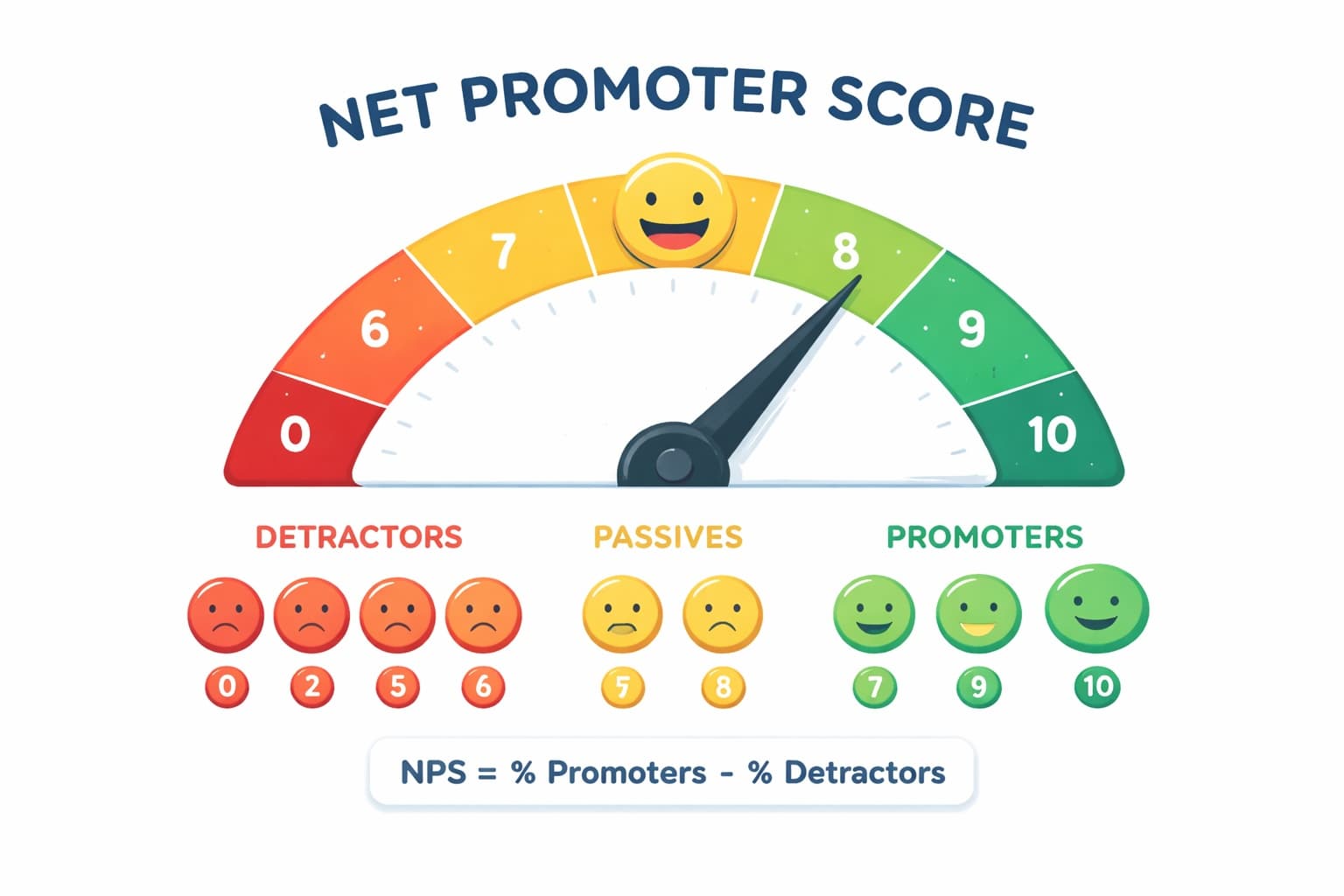
Understanding Your NPS Baseline
Before you can improve your NPS, you need a reliable baseline. Collect at least 100 responses before drawing conclusions. Your NPS will fluctuate naturally, so track the 30-day rolling average rather than daily scores. Industry benchmarks vary widely -- a score of 30 might be excellent for airlines but below average for e-commerce.
The Three Levers of NPS
There are only three ways to improve your NPS: convert detractors to passives, convert passives to promoters, or prevent promoters from sliding. Most businesses focus exclusively on fixing problems (the first lever) and miss the bigger opportunity of turning satisfied customers into advocates.
- Detractor recovery: Respond quickly, listen actively, fix the issue, follow up
- Passive activation: Identify what would make their experience remarkable
- Promoter retention: Recognize and reward loyalty, ask for referrals
Close the Loop Within 24 Hours
The single most impactful thing you can do is respond to feedback quickly. When a detractor gives you a low score and explains why, reaching out within 24 hours shows you care. Research shows that 70% of detractors who receive a timely, empathetic response will give the business another chance.
Tip: Set up webhook notifications so your team gets alerted immediately when a detractor response comes in. Speed matters more than perfection in your response.
Identify Root Causes, Not Symptoms
If multiple customers mention slow service, the root cause might be understaffing, poor workflow design, or an outdated POS system. Use sentiment analysis to categorize feedback themes and look for patterns. Fix the system, not just the individual complaint.
Build a Feedback Culture
Share NPS results with your entire team, not just management. When employees see how their work directly impacts customer satisfaction, they become invested in improvement. Celebrate wins when scores improve and treat dips as learning opportunities rather than blame sessions.